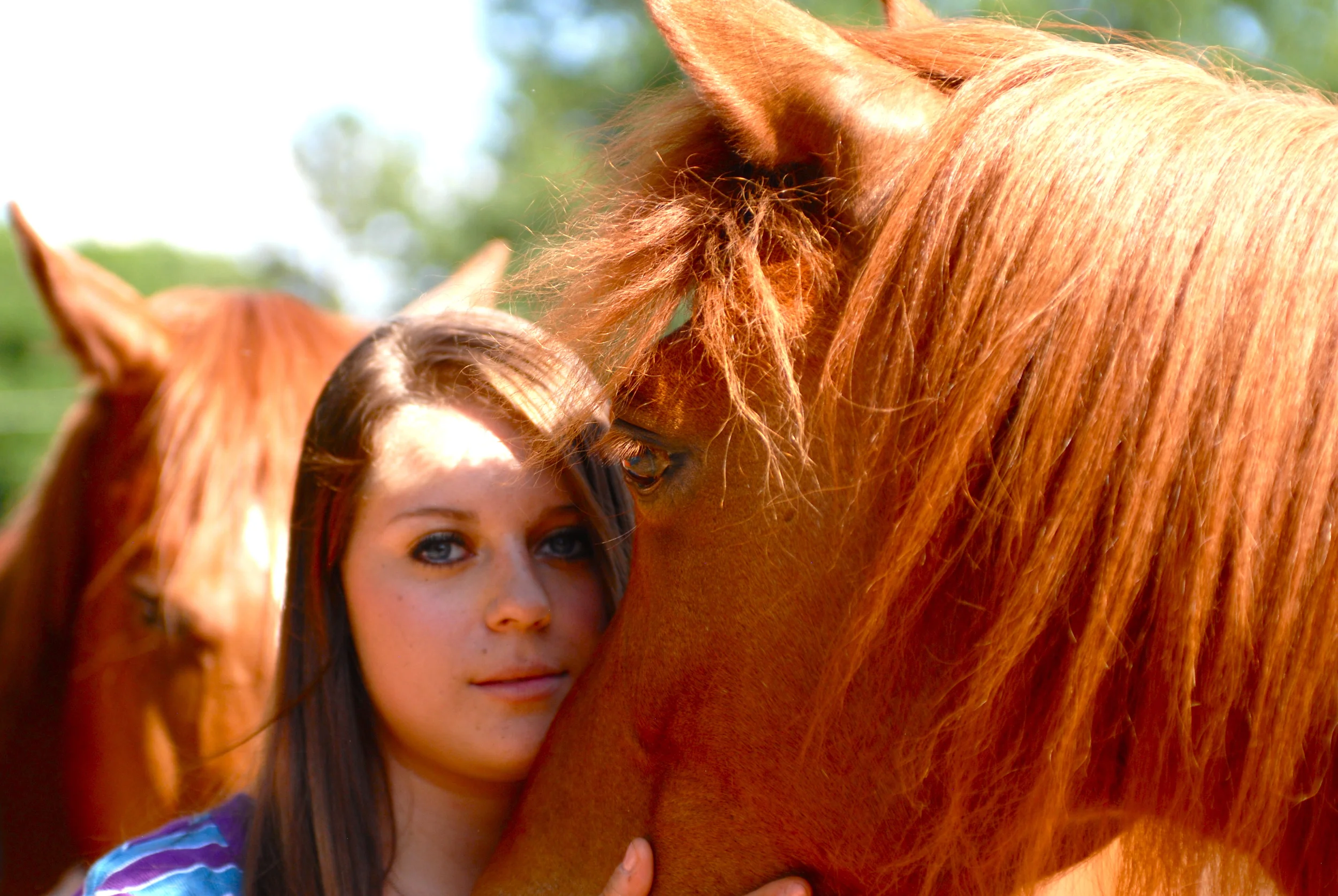
Why Horses?
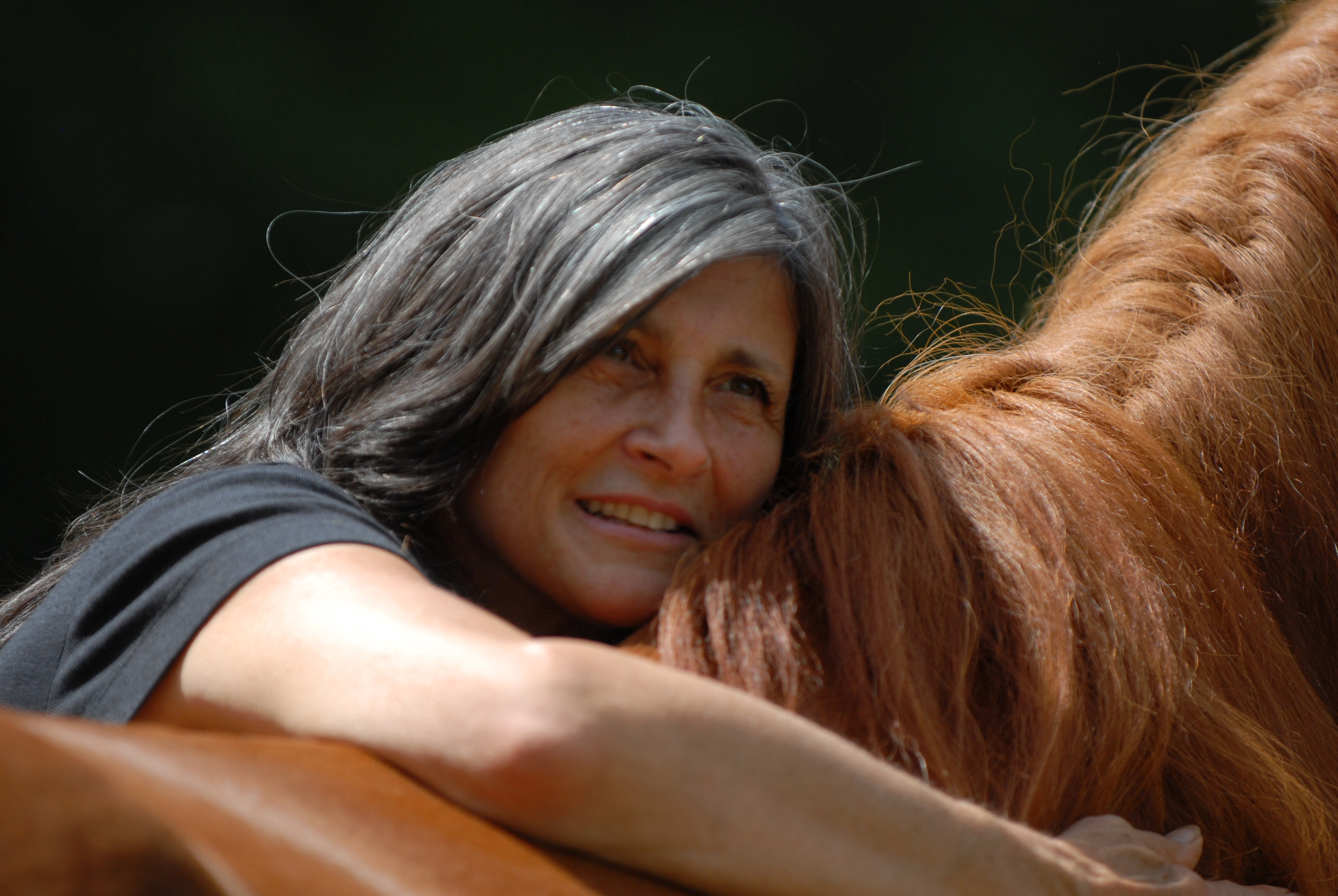
No one who knows horses can deny that they have a full range of feelings, attitudes, preferences and personalities. It’s easy to assume that because they don’t hold board meetings, play the stock market, or score well on the SATs, that they are less intelligent than humans. However, horses display their intelligence, logic, and intuition in many ways that we don’t recognize because we speak a different language.
Like us, horses feel fear, anger, grief, relaxation, happiness and affection. They play, fight and communicate in relationships which share many of the same dynamics of our own:

Trust
Respect
Boundaries
Affection
Family Structure
Mutual Support
Long term commitment
Far more than most people know, horses are social, emotional animals. They react and respond. A gelding in the field will call enthusiastically to an approaching friend, a mare whose foal dies will grieve, a horse abused by a human will develop fear and distrust.
Like us, horses are motivated to seek relief from pain, fear and emotional pressure. They seek creative solutions to get their needs met, and like us, if they cannot find successful solutions they will express their pain outwardly.
Horses too, can experience depression, anxiety attacks, attachment disorders, behavioral issues, post-traumatic stress, learned helplessness, and emotional shutdown. They can also demonstrate and teach such healthy behaviors as honest communication, trust, healthy boundaries, leadership, patience, assertiveness, play, affection, and nurturance.
Pairing a person and a horse with similar backgrounds, feelings, and behaviors creates a powerful non-threatening relationship in which a client can see herself with compassion, understanding and objectivity. By relating her horse’s experiences with her own, a client is able to get in touch with her feelings, own her behaviors and beliefs, and explore new choices. Learning empathy for her horse is the beginning of looking on herself with the same acceptance and unconditional love.
The relationship built between a client and a horse is a partnership in which both are empowered to learn, heal, and grow. A relationship with a horse requires a client to develop communication, patience, boundaries, and most of all, respect.
To be trusted by a horse, you must be trustworthy; to be respected by a horse, you must first give respect. As prey animals, horses are brilliant observers of nonverbal communication, and like humans, react negatively to disrespect, impatience, and lack of self-control. Even our most veiled intentions are easily detected by horses, and responded to accordingly. The lesson learned by the client is that by taking responsibility and making new choices, the horse responds differently.


Relationships take effort, communication, mutual respect and time to grow. A relationship with a horse can’t be forced, faked or manipulated. Through learning to treat a horse with respect – to be assertive without aggression, patient without giving in – the horse gives cooperation that cannot be gained through intimidation or force, impatience, or lack of control. A relationship with a horse cannot be forced or faked. As with any relationship, what we put into it determines what we get out of it.
There are infinite possibilities of including horses for emotional growth. The greatest benefit is that through learning with the horses, positive behaviors are not only taught but experienced. It’s an encounter of change and new growth, and clients are able to integrate the learning they have directly experienced. The immense value of equine experiential learning and psychotherapy is that it promotes change through action –it’s not just talk.
For all these reasons, and more, we have found that many of the best therapists have hooves.
For more information, email Lissa@FlyingChange.org